




Platform
Agent Action Packs
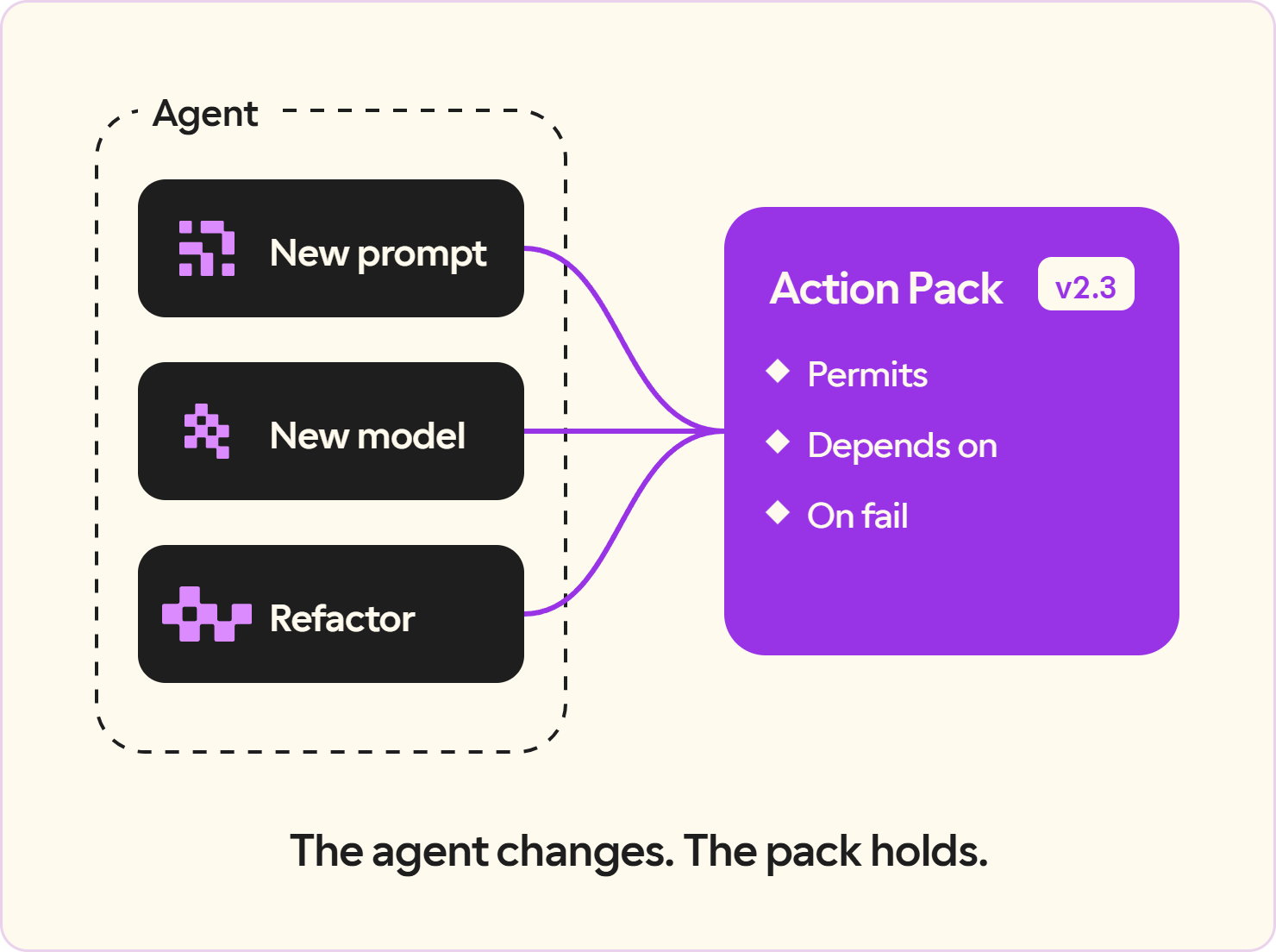
An Action Pack states what an agent is permitted to do inside a specific workflow, which state each decision depends on and what happens when a check fails.
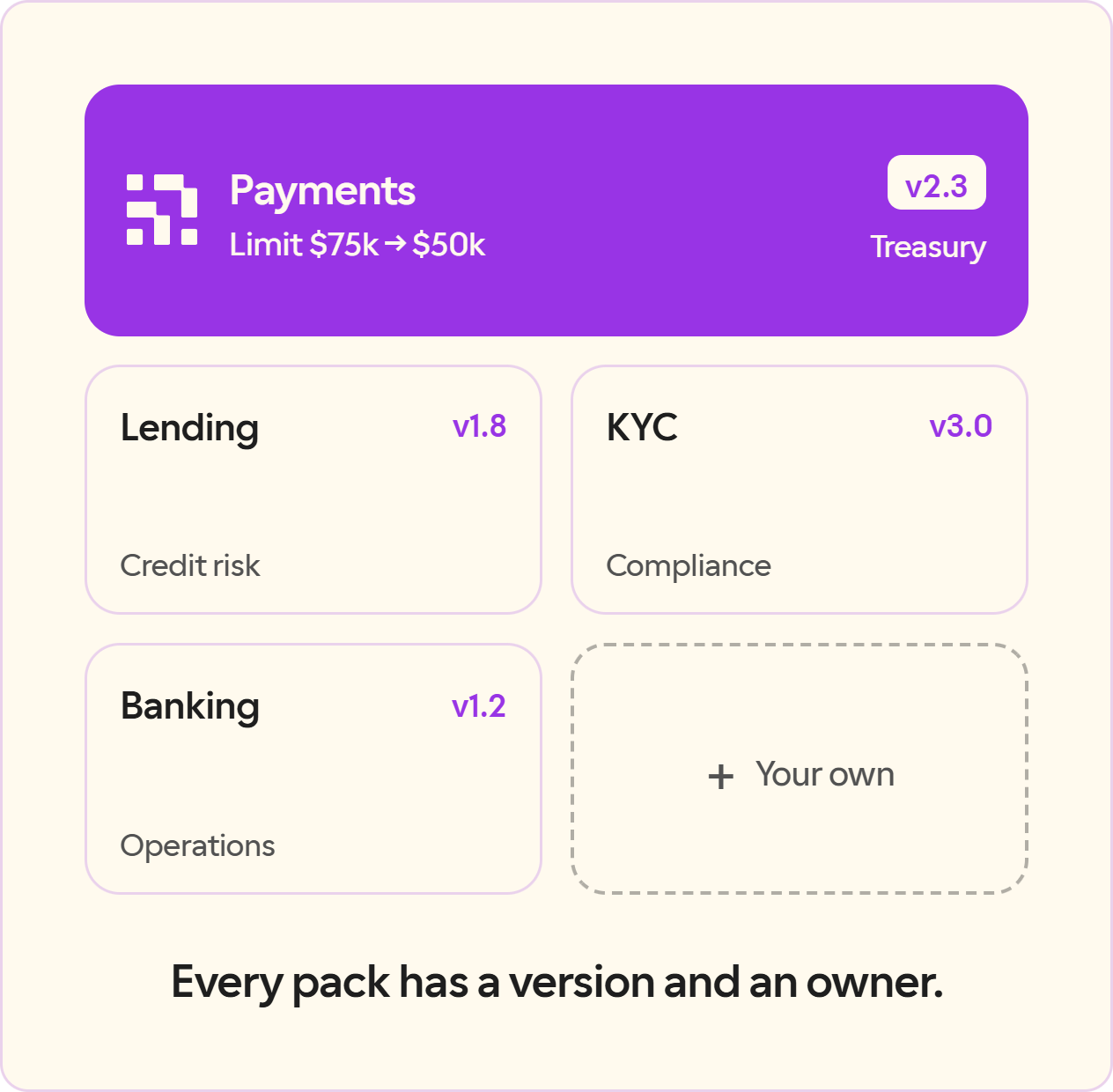
Packs are versioned artifacts. They live in your repository or ours, they diff like code and they carry an owner. When a rule changes because regulation changed or an internal limit moved, the change is visible and attributable rather than buried inside agent logic.
Why the pack sits outside the agent
An agent enforcing its own constraints is an agent auditing itself. Moving the contract out means the constraint survives a prompt change, a model swap or a refactor nobody flagged.
The pack library
Common workflows share common failure shapes. Invoice payment looks similar across companies, and so does vendor onboarding. Certified packs ship ready for those workflows so teams configure limits rather than authoring logic from scratch. The library compounds as more workflows get covered, in the same way managed rulesets do for web application firewalls.